Home » Phakic Lens Surgery – Intraocular Lens ICL
Home »
Phakic Lens Surgery – Intraocular Lens ICL
Written and edited by the Smart Laser Eye Center Editorial Staff · Medically reviewed by Prof. Dr. Fevzi Senturk, MD and Prof. Dr. Levent Alimgil, MD · Last updated: 10 September 2026
This page provides comprehensive information about Phakic Intraocular ICL Lens treatments.
Phakic Intraocular ICL Lens Surgery
What Is Phakic Intraocular ICL Lens Surgery and How Does It Work? Generally, Phakic Intraocular ICL Lens Surgery applies to patients with high prescriptions who cannot have standard laser vision correction. Specifically, this advanced procedure successfully treats severe myopia, hyperopia, and astigmatism eye defects simultaneously. Technically, the intraocular implant consists of a specialized collagen-based biocompatible material known as collamer. Importantly, Phakic Intraocular ICL Lens Surgery means that your surgeon leaves your natural lens completely untouched inside your eye. Consequently, this permanent lens works seamlessly with your existing anatomy to focus light properly onto your retinal surface.
Who Is Eligible for Phakic Intraocular ICL Lens Surgery?
Generally, patients between twenty-one and forty-five years old represent the ideal candidates for this advanced surgical treatment. Additionally, individuals whose eyes are not suitable for laser surgery due to thin corneas can choose this option. Fortunately, stable keratoconus patients over thirty-five years old achieve outstanding and permanent results through this micro-surgical method. However, Phakic Intraocular ICL Lens Surgery does not correct the progressive presbyopia reading vision problems that start after age forty-five. Therefore, older patients will still use standard reading glasses to view close-up objects clearly after their procedure.
Why Does Corneal Thickness Not Matter in This Advanced Procedure?
Specifically, your corneal thickness does not affect your candidacy for Phakic Intraocular ICL Lens Surgery at all. Conversely, standard refractive laser techniques strictly require a minimum corneal volume to reshape your eye tissue safely. Fortunately, the visual recovery after Phakic Intraocular ICL Lens Surgery remains remarkably fast, matching standard LASIK healing times. Furthermore, an experienced surgeon can safely remove or replace these implants in the future if your prescription changes. Additionally, the advanced built-in collamer technology permanently protects your delicate internal eye structures from harmful ultraviolet rays.
Understanding the Phakic Intraocular ICL Lens Surgery Process
Generally, Phakic Intraocular ICL Lens Surgery takes approximately twenty to thirty minutes of surgical time per eye. Subsequently, your medical team will closely monitor your progress in the clinical recovery room for a few hours. Fortunately, you can comfortably leave our hospital and return home on the exact same day of your procedure. Thereafter, you must apply antibiotic eye drops for one week and topical steroid drops for up to four weeks. Ultimately, patients must attend their mandatory follow-up appointments at one day, one month, and twelve months post-surgery.
Why Premium FDA-Approved STAAR Surgical Lenses Cost More
Clearly, our elite surgeons prefer utilizing FDA-approved EVO and EVO+ Visian lenses from the world-renowned manufacturer STAAR Surgical. Specifically, these biocompatible implants offer unmatched optical success rates for individuals with exceptionally high diopter refractive errors. Mali olarak, specialized ICL implants command a significantly higher price range than standard cataract intraocular lenses. Consequently, the overall treatment cost for Phakic Intraocular ICL Lens Surgery remains higher than traditional cataract procedures. Ultimately, investing in this premium clinical technology delivers absolute safety, maximum visual freedom, and a lifetime of clear vision.
How RLES AI supports phakic ICL planning
Our clinic uses RLES AI®, a clinical decision support system for refractive and lens surgery planning, as a second pass over the assessment before an implantable collamer lens is planned. A phakic lens leaves your own natural lens in place and adds an implant in front of it, so the questions are different from every other procedure on this site: the cornea is not reshaped, and the limiting factor is the amount of space inside the eye.
The single most misread number: anterior chamber depth
The space available for the implant is described by the anterior chamber depth, and the manufacturer’s indication defines it as the distance measured from the inner surface of the cornea (the endothelium) to the front of the natural lens. Devices do not all report that quantity. Some report the depth measured from the outer surface, which includes the corneal thickness and therefore reads roughly half a millimetre deeper than the value the indication asks for. Half a millimetre is larger than the entire margin between a suitable and an unsuitable eye.
The software therefore asks explicitly which surface the measurement was taken from. If it was taken from the outer surface, the corneal thickness is subtracted and the conversion is shown in the report. If the corneal thickness is not available, no conversion is performed and the value is recorded as missing rather than estimated — the one thing that must not happen here is a borderline eye being cleared by a number that was measured the wrong way.
Endothelial cell count is a preoperative number, and it matters afterwards
The implant sits close to the inner cell layer of the cornea, so the cell count is recorded before surgery and used as the baseline for follow-up. A ten-year series of 103 eyes with the current lens design found no cataract formation, no angle closure, no glaucoma and no lens removal over the decade, with 74 per cent of eyes within ±0.50 D of target and 99 per cent within ±1.00 D. Endothelial cell density and vault both declined slowly and predictably over the ten years — and the eyes that ended up as low outliers on cell count were the eyes that started with a lower count. That is the argument for measuring it properly before surgery rather than only after.
Chung B, Choi JY, Kang DSY, et al. Am J Ophthalmol. 2024;269:1-10. doi:10.1016/j.ajo.2024.08.007
Vault, angle and pressure
Vault is the clearance between the implant and your natural lens: too little risks contact and cataract formation, too much crowds the drainage angle. It cannot be measured before surgery, only predicted from the eye’s own dimensions and then confirmed afterwards, so the report treats it as a prediction and names it as one. The anterior chamber angle value is read in every case, and the postoperative pressure follow-up schedule is written into the plan rather than left to routine.
Manufacturer indication limits are reported as they are
The age range, correction range and cylinder range are the manufacturer’s own indications, not our thresholds, and they are reported as such: the myopia indication covers a wider age band than the hyperopia one, and the hyperopic version carries a CE mark but is not FDA-approved — a regional distinction that the report states rather than glosses over.
The cornea is still screened, even though it is not being treated
A phakic lens does not remove corneal tissue, so it is sometimes offered as the answer for an eye that laser correction cannot serve. That is often correct — but it is only correct when the reason laser was excluded is tissue or optics, not disease. Where keratoconus or another ectatic condition is present, the shape of the cornea is still changing, and a lens implanted in front of a progressing cornea corrects a prescription that will not stay put. Ectasia screening and contact-lens-induced surface change are therefore run in full, and where the cornea is unstable the sequence is stabilisation first, at least 6 to 12 months of documented stability, and only then the refractive implant.
Why the record matters in a phakic eye
The decision is your surgeon’s. What the system adds is a record that each of these items was asked and measured — and, where a value was measured the wrong way or not at all, that this is stated instead of being quietly accepted. The software does not make a diagnosis, does not size the implant and does not guarantee an outcome. Detailed information: rlesai.com.
For more price information about ICL surgery please click here….
Useful Links
Our Expert Eye Surgeons, Laser Eye Surgeries. Sensitive Profile Patient Program. Intraocular Lens ICL Surgery(FDA). Cataract and Lens Replacement Eye Surgeries. Keratoconus Cross-Linking Surgery. Blepharoplasty Aesthetic Surgeries. Dry Eye Syndrome Treatments. Periodic Eye Examinations.
Frequently Asked Questions About Phakic Intraocular ICL Lens Surgery
How Long Does the Entire Phakic Intraocular ICL Lens Surgery Procedure Take?
Q: How Long Does the Entire Phakic Intraocular ICL Lens Surgery Procedure Take?
A: Fortunately, our highly experienced ophthalmic team performs this advanced micro-surgical procedure on both eyes simultaneously. Subsequently, the total treatment duration requires approximately forty-five minutes of operating time inside our laser suites.
At What Age Can I Safely Undergo Phakic Intraocular ICL Lens Surgery?
Q: At What Age Can I Safely UndergoPhakic Intraocular ICL Lens Surgery ?
A: Generally, our surgeons perform this procedure for patients between twenty-one and forty-five years old. Conversely, older individuals with active presbyopia reading difficulties cannot benefit from these specialized distance-correcting implants.
How Painful Is the Healing Process?
Q: How Painful Is the Healing Process?
A: Importantly, our medical staff applies soothing local anesthetic eye drops and a mild sedative before starting. Therefore, you will completely avoid experiencing any physical pain or ocular discomfort during your entire treatment.
Can I See or Feel the ICL Implant Inside My Eye?
Q: Can I See or Feel the ICL Implant Inside My Eye?
A: Generally, you cannot see or feel the premium lens implant at all after your recovery phase. Specifically, our expert surgeons place the flexible microscopic lens completely behind your dark iris tissue. Therefore, the implant remains entirely invisible to both you and anyone looking directly at your eyes.
Can the ICL Lens Slip or Move Out of Place Later?
Q: Can the ICL Lens Slip or Move Out of Place Later?
A: Fortunately, the advanced structural design of the STAAR Surgical lens ensures absolute stability inside your eye cavity. Subsequently, the implant rests comfortably within the natural posterior chamber without shifting during heavy physical activities. Therefore, you can safely practice intense sports, swim, or exercise without experiencing any mechanical displacement.
Does Phakic ICL Surgery Cause Permanent Dry Eye Syndrome?
Q: Does Phakic ICL Surgery Cause Permanent Dry Eye Syndrome?
A: Conversely, traditional laser vision correction methods like LASIK can temporarily disrupt your delicate surface corneal nerves. Importantly, Phakic Intraocular ICL Lens Surgery leaves your anterior corneal tissue completely untouched throughout the procedure. Consequently, choosing this advanced lens replacement treatment preserves your natural tear film and avoids chronic dry eye symptoms.
What Happens If My Vision Changes in the Future?
Q: What Happens If My Vision Changes in the Future?
A: Fortunately, the absolute reversibility of this modern surgical technique provides total peace of mind for younger patients. Specifically, if your natural prescription shifts over time, an eye surgeon can safely remove the existing implant. Subsequently, our medical team can easily replace it with a new power lens to restore perfect clarity.
How Much Does Phakic Intraocular ICL Lens Surgery Cost on Average?
Q: How Much Does Phakic Intraocular ICL Lens Surgery Cost on Average?
Initially, premium ICL implants from STAAR Surgical maintain a higher price point than standard cataract intraocular lenses. Consequently, our advanced medical center applies a distinct cost per eye pricing structure depending on your diopter correction. For more pricing information please click the link..
Can I Get a Cataract After Having Phakic Intraocular ICL Lens Surgery?
Q: Can I Get a Cataract After Having Phakic ICL Surgery?
A: Generally, developing a natural cataract remains a normal part of the aging process after age sixty. Specifically, having an ICL implant does not prevent you from getting a cataract later in life. Fortunately, if a cataract develops, a surgeon can easily remove both the ICL and the cloudy natural lens. Subsequently, our medical team will replace them with a premium multi-focal smart lens to restore your vision.
Will My Body Reject the Intraocular Collamer Lens Over Time?
Q: Will My Body Reject the Intraocular Collamer Lens Over Time?
A: Conversely, your immune system will not recognize or reject the premium STAAR Surgical implant as a foreign object. Specifically, the proprietary collamer material consists of pure collagen and premium biocompatible polymers. Consequently, this unique structure allows the lens to remain completely harmonious with your eye chemistry permanently. Therefore, patients safely avoid any chronic inflammation or long-term tissue rejection issues after their procedure.
How Soon Can I Return to Work and Normal Activities?
Q: How Soon Can I Return to Work and Normal Activities?
A: Generally, most patients experience outstanding visual clarity within twenty-four hours following their lens replacement procedure. Fortunately, you can comfortably return to light desk work or computer use within two days. However, you must strictly avoid lifting heavy weights or rubbing your eyes for at least two weeks. Subsequently, our expert medical team will provide a personalized activity timeline based on your healing rate.
What Happens If I Blink or Move My Eyes During the Surgery?
Q: What Happens If I Blink or Move My Eyes During the Surgery?
A: Initially, many patients worry about accidentally ruining their procedure through sudden, involuntary ocular movements. Fortunately, our specialized surgeons utilize a gentle micro-speculum device to keep your eyelids perfectly open throughout. Therefore, you cannot accidentally disrupt the treatment process by moving your eyes or blinking.
This page is general information only and is not a diagnosis or a treatment recommendation; suitability is determined by an eye examination.
Your Expert Eye Surgeons

Education Information:
He completed his primary, secondary and high school education in Ankara. Fevzi Senturk graduated from Ankara University Faculty of Medicine with a degree in 1994, and subsequently received his Ophthalmology Specialization training from Eskisehir Osmangazi University Faculty of Medicine in 2000. Afterwards, Fevzi Senturk completed his Retina Fellowship at Istanbul Retina Institute and earned the title of Associate Professor at this institution. He is still continuing his academic career by taking the title of Professor at Istanbul Medipol University. He has focused his scientific and clinical studies on retinal diseases, Vitreoretinal surgery and cataract surgery.Awards,Memberships and Scientific Research:
- Retinal capillary hemangioma: AB interno surgical excision, 43rd National Congress Awards, Best Video First Prize, 2009
- Photodynamic therapy guided by indocyanine green angiography in chronic central serous chorioretinopathy, Turkish Journal of Ophthalmology, Best Publication Third Prize, 2000
- Retinal capillary hemangioma: AB interno surgical excision, 43rd National Congress Awards, Best Video First Prize, 2009
- Photodynamic therapy guided by indocyanine green angiography in chronic central serous chorioretinopathy, Turkish Journal of Ophthalmology, Best Publication Third Prize, 2000
- Vitreoretinal Surgery Techniques, Second Edition, Hayat Medicine Bookstore, 2008
- Eye Diseases and Anti-VEGF Therapy 2010.
- Ocular Electrophysiology (TOD Education Publications No 13) Meaning of VEP, VEP registration and parameters in ISCEV standards., 2011
- Clinical Eye Atlas (Oxford Atlases in Ophthalmology), 2012
- Imaging in Ophthalmology, Microperimetry, 2013
- Ocular Electrophysiology (TOD Education Publications 1st Edition), Multifocal Electroretinogram Recording and Evaluation, 2022.
- Current Vitreoretinal Surgery (TOD Education Publications), Surgical Anatomy of the Retinal and Vitreous, 2022.
- Turkish Medical Association
- Turkish Ophthalmology Association
- Turkic Republics Ophthalmology Association
- Electrodiagnostic unit board membership
- Electrodiagnostic unit training representative
- International Society for Clinical Electrophysiology of Vision (ISCEV)
Specialized Treatments and Surgeries:
- Macular Degeneration Disease and Treatments
- Retinal Detachment Treatments
- Retinal Hemorrhages Due to Diabetes and Hypertension and Their Treatments
- Retinitis Pigmentosa Treatments
- Central Serous Chorioretinopathy
- Retinal Vascular Occlusions
- Epirentinal Membrane
- Macular Hole
- Glaucoma eye pressure
- Neuroophthalmological Diseases
- Vitrectomy-Retina Surgery
- Intravitreal Injection Treatments
- Argon Laser Photocoagulation Treatment
- Photodynamic Therapies
Foreign language:
- English
MEDICAL UNIVERSITY of Ankara
28 Years of EXPERIENCE
>25.000 Surgery
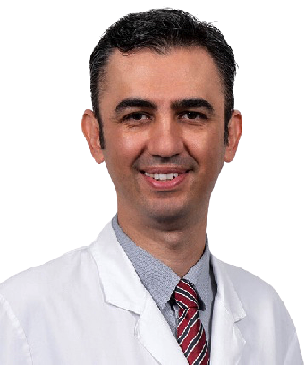
Education Information:
He graduated from Ankara University Faculty of Medicine in 2000 with the 4th rank. He completed his ophthalmology residency at Hacettepe University Faculty of Medicine . Between 2009 and 2011, he completed his master's degree in cornea, ocular surface and refractive surgery at Harvard Medical School in Boston, US. He qualified the title of associate professor in 2012 and Professor title in 2017 . He has performed over 15,000 surgeries in over twenty years.Academic achievements:
He has received numerous national and international awards (ARVO-Asia Travel Fellowship Grant Award, Gazi Eye Foundation 'Best Scientific Paper Award', ARVO Collaborative Research Fellowship Award, ICO Helmerich Fellowship Award, ICO WOC Fellowship Award, Royal College of) Ophthalmologists Best Reviewer Award, Turkish Academy of Sciences Outstanding Young Scientist Award). Koç University established its own research group with the support of KUTTAM, TÜBİTAK, TÜBA and ARVO.Awards, Memberships, Certificates:
- Ankara University Medical School, 4th rank in graduation (2000)
- International Council of Ophthalmology (ICO) “Basic Science Assessment in Ophthalmology including Optics and Refraction” Certificate (2004)
- International Council of Ophthalmology (ICO) “Clinical Science Assessment in Ophthalmology” Certificate (2005)
- Association for Research and Vision in Ophthalmology (ARVO)-Asia 'Travel Fellowship Grant Award' (2007)
- Gazi Eye Association Scientific Award (2008)
- TÜBİTAK ULAKBİM UBYT Awards
- Association for Research and Vision in Ophthalmology (ARVO) 'Collaborative Research Fellowship Award' (2009)
- TOD Glaucoma Symposium Best Oral Presentation Award (2009)
- TÜBİTAK 2219-Postdoctoral Research Fellow Award (2009)
- International Council of Ophthalmology (ICO) 'Helmerich International Fellowship Award' (2010)
- The Turkish Academy of Sciences (TÜBA) 'Outstanding Young Scientist Award' (2012)
- Association for Research and Vision in Ophthalmology (ARVO) 'Developing Country Eye Researcher Fellowship Award' (2015)
- Turkish Ophthalmology Society Scientific Award (2015)
- International Council of Ophthalmology (ICO) WOC2106 Travel Fellowship Grant Award (2016)
- Turkish Medical Association, Most Successful medical doctor of the year (2016)
- Turkish Ophthalmology Association
- Association for Research in Vision and Ophthalmology (ARVO)
- European Association for Vision and Eye Research (EVER)
- American Academy of Ophthalmology (AAO)
- American Society of Cataract and Refractive Surgery (ASCRS)
- European Society of Cataract and Refractive Surgeons (ESCRS)
Specialized Treatments and Surgeries:
- Corneal Transplant
- Complicated Cataract surgery
- Retinitis Pigmentosa Wharton jelly stem cell treatment
- Refractive Laser Eye Surgeries
- Keratoconus Cross-Linking
- Ring therapy
- Hard-hybrid innovative contact lenses
- Dry eye (Autologous serum, IPL, LipiFlow treatment)
- Glaucoma (eye pressure)
Foreign language:
- English
- Turkish
Harvard MEDICAL School
22 Years of EXPERIENCE
>15.000 Surgery
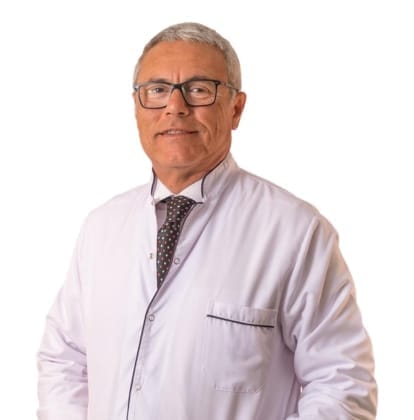
Prof. Dr. Levent Alimgil graduated from Istanbul University Cerrahpasa Faculty of Medicine in 1986 and completed his residency in ophthalmology at Trakya University Faculty of Medicine in 1990. He was appointed Assistant Professor in 1994, Associate Professor in 2001 and Professor of Ophthalmology in 2007 at the same faculty.
He served as Medical Director of the Yeditepe University Eye Research Centre between 2007 and 2009, and as Head of the Department of Ophthalmology at Medicana International Istanbul Hospital between 2009 and 2019. Since 2025 he has been Medical Director of the Nisantasi Hospital Eye Centre.
His clinical practice covers cataract surgery and refractive lens exchange with monofocal, multifocal, trifocal and toric intraocular lenses, phakic ICL implantation, keratoconus management and corneal cross-linking, the medical and surgical treatment of glaucoma including trabeculectomy, and corneal transplantation. He has performed more than 6,000 keratoplasty procedures.
He is a member of the Turkish Ophthalmological Association and of the American Academy of Ophthalmology (AAO). He speaks English and German.
ISTANBUL UNIVERSITY Cerrahpasa
36 Years of EXPERIENCE
>6.000 Corneal Transplants
Patients Reviews
Investing in Your Vision: Why Quality and Transparency Matter in Phakic Intraocular ICL Lens Surgery
Generally, you might compromise on quality when purchasing a cheap television or standard home appliance. However, your eyesight represents an irreplaceable lifetime asset that is simply not worth the gamble. Specifically, choosing budget ICL surgery often means sacrificing ultra-precise premium collamer lenses and expert physician experience. Consequently, this dangerous sacrifice significantly increases your clinical risks due to substandard care and flawed sterile conditions.
Selecting the Right Ophthalmic Clinical Infrastructure for Phakic Intraocular ICL Lens
Therefore, when opting for premium lens implantation, your highest priority should be selecting a specialized hospital. Specifically, you should actively look for a clinic equipped with advanced diagnostic infrastructure and experienced surgeons. Ultimately, we remind all our patients that they only have two eyes to navigate the world safely. Indeed, your vision remains your most sensitive, critical, and valuable sensory organ throughout your entire life.
Our Absolute Commitment to Phakic Intraocular ICL Lens Cost Transparency
Fortunately, at Smart Laser Eye Center, we never compromise on surgical safety or cutting-edge medical technology. Instead, we offer our advanced Phakic Intraocular ICL Lens Surgery through an understandable, fair, and structured pricing model. Furthermore, this clear framework includes absolutely no hidden clinical costs or unexpected post-operative fees. Consequently, this honest approach makes premium lens surgery truly transparent, predictable, and highly accessible for everyone.
The True Freedom of Life Without Glasses or High Prescriptions
Initially, consider the lifetime accumulated expenses of constantly purchasing stronger contact lenses, designer glasses, and solutions. In addition, think about the daily visual frustration of living with extreme nearsightedness, hyperopia, or severe astigmatism. Beyond this heavy financial burden, you must also consider the deeply restrictive impact of poor uncorrected vision. Consequently, blurry vision routinely damages your driving safety, sports performance, and overall quality of daily life.
Unlocking an Active Lifestyle with Premium Collamer Phakic Intraocular ICL Lens
Imagine, instead, the absolute freedom of driving safely at night without experiencing blinding glares or blurry spots. Similarly, you can enjoy swimming, exercising, and working on computers without constantly searching for your contact lenses. Fortunately, Phakic Intraocular ICL Lens Surgery utilizing premium biocompatible collamer implants safely unlocks this barrier-free lifestyle. Subsequently, you can permanently restore your natural visual acuity and see the world in vivid detail again.
A Smart Long-Term Investment in Your Future Freedom
By eliminating the ongoing expenses of prescription eyewear, modern ICL surgery easily pays for itself over time. In fact, choosing premium vision correction acts as a smart, highly rewarding long-term investment in your future. Our proprietary RLES AI® decision-support software is used to cross-check each treatment plan before surgery; the treatment decision itself rests with your surgeon, and our medical team plans every treatment individually. Ultimately, we calculate the exact cost per eye transparently to guide you toward true visual freedom.