Home »
LASIK Laser Eye Surgery
Myopia, Hyperopia and Astigmatism Correction with LASIK Laser Eye Surgery
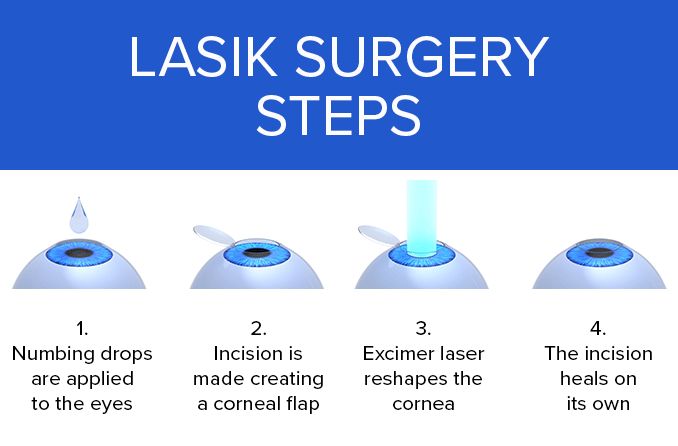
LASIK stands for “Laser-Assisted-In-Situ-Keratomileusis” in medical literature. Specifically, this world-renowned method relies on a sophisticated, two-stage surgical process to permanently eliminate refractive errors. At Smart Laser Eye Center, our advanced medical team utilizes state-of-the-art 5th Generation Excimer Laser Technology. Driven by our proprietary RLES AI® software, consequently, we deliver unmatched scanning accuracy and personalized visual correction for every single patient.
The First Stage: Precise Flap Creation
When starting your treatment, your eye surgeon first sterilizes your eyes to ensure absolute hospital safety. Subsequently, the clinical team places a transparent surgical drape on your face for optimal sterile conditions. To prevent blinking, your doctor gently fixes your eyelids with a special surgical instrument.
Afterwards, the surgeon creates a thin corneal flap measuring 100 to 120 microns. They achieve this precise separation using a Femtosecond laser or a specialized Microkeratome device. Fortunately, you do not feel any pain during this flap creation. Instead, you only experience a mild touching sensation because our team completely anesthetizes your eye with advanced drops.
The Second Stage: Advanced Laser Remodeling
Once the preparation finishes, your eye surgeon carefully opens the corneal flap to expose the underlying tissue. Subsequently, the robotic system applies a precise laser beam directly onto the stroma layer. Consequently, this advanced robotic integration reshapes your cornea and completes the correction of your eye defects.
Finally, your surgeon carefully places the protective flap back into its natural position. The team then rinses your eye with a sterile serum to officially conclude the procedure. Ultimately, this entire seamless process takes an average of only 5 to 10 minutes for each eye. As a result, the LASIK method stands out as a very comfortable technique for our patients.
Are LASIK and iLASIK Methods the Same?
Patients often hear these two terms and wonder about their exact technical differences. Indeed, clinics call them by different names simply because surgeons use different surgical instruments during the first stage.
The LASIK Device: During a standard procedure, the eye surgeon creates the corneal flap using a high-precision Microkeratome surgical device.
The iLASIK Device: In contrast, during an iLASIK procedure, the system creates the corneal flap using a Femtosecond Laser device.
Interestingly, there is no risk factor difference between flap creation with a Microkeratome or a Femtosecond Laser. On the contrary, corneal flaps created with a Microkeratome often look more transparent. Furthermore, they possess much smoother tissue edges. Therefore, this smooth edge helps create a clearer vision on your very first post-operative day. Consequently, it also allows the flap edges to disappear much more quickly.
Not every doctor can use the Microkeratome surgical instrument effectively. Instead, eye surgeons with exceptionally high surgical skills specifically prefer to operate with a Microkeratome. Moreover, iLASIK surgery remains more expensive than the traditional LASIK method.
What Happens After Your Surgery?
Modern laser eye surgery creates a slight burning, watering, and stinging sensation within the first five hours. Therefore, if your doctor deems it necessary, they will place a soft contact lens for temporary flap protection. Subsequently, your specialist removes this contact lens during your first-day post-operative examination.
Fortunately, the patient’s vision becomes remarkably clear shortly after this initial period. In fact, it is entirely possible to return to normal life just five hours after your procedure. For this reason, there is absolutely no obstacle preventing you from continuing your routine activities with clear vision the next day.
Who is LASIK Laser Eye Surgery Suitable For?
Visual defects can drastically complicate your daily activities, comfort, and productivity. In addition, these vision problems make it necessary to use contact lenses or prescription glasses to maintain your lifestyle. Consequently, these obligations create undesirable situations that cause physical discomfort for many people.
Fortunately, our specialized surgeons successfully correct these eye defects using tailored laser techniques. Specifically, the treatment perfectly suits patients with suitable eye structures who suffer from Myopia, Hyperopia, Astigmatism, and Presbyopia.
Schedule Your Free Diagnostic Assessment
It is entirely possible to get rid of your eye defects permanently with the LASIK method. Specifically, this solution targets patients between the ages of 18 and 60 who have suitable eyes. Indeed, the LASIK method remains the most widely used technique in the world for patients who want to maximize their quality of life.
You can contact Smart Laser Eye Center 24/7 to get detailed information. In particular, you can visit our hospitals and receive your comprehensive eye examinations without paying any fee. Thus, you can quickly learn from our experts whether your eyes qualify for this life-changing procedure. Remember, our patient coordinators remain available to answer all your questions and guide you through the whole process.
Useful links:
About our eye surgeons. Presbyopia LASIK Laser Eye Surgery. NoTouch T-PRK Laser Eye Surgery. PRK Laser Eye Surgery. Sensitive Profile Patient Program. LASIK Definition. FAQ. Cataract and Lens Replacement Eye Surgeries. Keratoconus Cross-Linking Surgery. Blepharoplasty Aesthetic Surgeries. Dry Eye Syndrome Treatments. Periodic Eye Examinations.
Frequently Ask Questions About LASIK Laser Eye Surgery
At what age can I have LASIK Laser Eye Surgery?
Under normal conditions, our surgeons perform LASIK laser eye surgery on suitable patients aged 18 years and older.
Should I choose LASIK Laser Eye surgery or (No-Touch) TransEpithelial-PRK Laser Eye surgery?
Why LASIK Offers Superior Patient Comfort
Absolutely LASIK! Indeed, LASIK eye surgery remains the premier choice for overall patient comfort. In contrast, surgeons typically consider No-Touch T-PRK as a last resort for specific patients. Specifically, this alternative applies only when a patient’s eye structure does not qualify for a standard LASIK procedure.
During the No-Touch method, unfortunately, the patient spends four days experiencing severe pain, stinging, and burning sensations. Furthermore, your vision improves quite slowly after the first week. Consequently, it may take up to three months to achieve optimal visual outcomes. Therefore, the patient usually cannot continue their normal daily life for at least one week. Ultimately, these facts prove that LASIK stands out as the most accurate and reliable method for your comfort.
Medical Exceptions for No-Touch T-PRK
Nevertheless, specific medical conditions may require the No-Touch technique. For instance, our surgeons successfully select this method for patients with thin corneas below standard medical limits. Additionally, this procedure safely accommodates individuals who previously underwent retinal detachment surgery. Finally, patients suffering from glaucoma or other unique ocular conditions can securely benefit from this alternative approach.
What refractive defects can be corrected with LASIK Laser Eye Surgery?
Myopia (Nearsightedness)
People with Myopia usually possess a corneal structure that curves too steeply toward the front. As a result, incoming light rays focus in front of the retina rather than directly on it. Therefore, this specific refractive error causes distant objects to produce a blurred image while close objects remain clear.
Hyperopia (Farsightedness)
For individuals suffering from Hyperopia, in contrast, the cornea is flatter than it should be. Consequently, light rays focus behind the retina instead of on its surface. Ultimately, this structural variation causes blurry vision, especially when patients try to focus on near objects.
Astigmatism
Typically, patients with astigmatism tend to develop blurred or double vision at all distances. Specifically, this impairment stems directly from the abnormal, asymmetrical shape of the cornea. Fortunately, our modern robotic systems can easily reshape this irregular surface to restore perfect visual clarity.
Presbyopia (Aging Reading Vision)
Presbyopia literally translates to aging eyes in medical literature. Indeed, this natural process affects almost everyone over the age of 40 or 45 as they get older. Consequently, you find yourself needing reading glasses to read newspapers or view mobile phones.
Fortunately, we precisely apply our specialized Presbyopia LASIK Smart Laser treatment to correct this reading vision problem. However, your unique eye structure must meet our eligibility criteria during advanced diagnostic scanning.
Achieve Clear Eyesight Today
In summary, patients do not have to live with permanently blurred vision. Myopia, Hyperopia, Astigmatism, and Presbyopia will respond excellently to advanced Laser Eye Surgeries. Instead of relying on glasses, contact Smart Laser Eye Center to safely unlock your true visual freedom
When can I return to my normal life after LASIK Laser Eye Surgery?
Following your LASIK laser eye surgery, our medical team strongly recommends resting or sleeping for five to six hours. Subsequently, you can safely return to your normal routine activities at home. Fortunately, you can comfortably drive and return to work the very next day. After two days, additionally, you can safely take a shower without any complications. However, you must absolutely avoid applying makeup, entering pools, or participating in sweaty sports for two weeks. Ultimately, following these precise guidelines ensures a seamless and rapid healing process for your vision.
I was told that my cornea thickness is thin, can I still have LASIK Laser Eye Surgery?
Alternatively, if your corneal thickness falls below standard limits, your doctor may recommend PRK, LASEK, or No-Touch T-PRK.
Can I have laser eye surgery while I’m breastfeeding or pregnant?
Specifically, pregnant or breastfeeding mothers must postpone their laser eye treatment. Indeed, temporary hormonal changes during this special period can significantly alter your natural eyesight numbers. Fortunately, you can safely consider having laser eye surgery three months after you completely stop breastfeeding. Alternatively, if you choose not to breastfeed, you should wait three months after you give birth. Ultimately, following this precise timeframe ensures the most accurate diagnostic measurements and guarantees your long-term safety.
Can Keratoconus patients have Laser Eye Surgery?
Understanding Keratoconus and Vision Loss
Keratoconus is a slowly progressive, degenerative eye disease. Specifically, this condition causes the cornea to become thinner and bulge outward into a cone-like shape. Consequently, patients may experience significant visual impairments or potential vision loss over time. Fortunately, you can effectively halt this progressive disease through advanced Corneal Cross-Linking surgery.
Advanced Combined Treatment Options
Traditionally, keratoconus patients must rely on specialized prescription glasses or rigid contact lenses to see clearly. However, advanced clinical solutions are available for eligible candidates. For instance, if you are over the age of 35 and possess a stable corneal structure, our surgeons can safely combine Laser Eye Surgery with Cross-Linking treatment. Ultimately, this combined approach helps permanently eliminate your dependency on glasses.
The Phakic ICL Lens Alternative
Alternatively, some keratoconus patients cannot undergo standard laser procedures due to severe corneal thinning. Similarly, individuals with exceptionally high prescriptions might face the same medical limitations. Fortunately, Intraocular Phakic ICL lens implantation offers an outstanding clinical solution for these specific cases. Indeed, this bio-compatible lens corrects vision from inside the eye without altering your delicate cornea.
What are the most common risks and temporary side effects?
Risks, Side Effects, and Complications in Laser Eye Surgery
Laser eye surgery stands out globally as a highly safe and advanced outpatient procedure. However, like any surgical medical intervention, some rare clinical complications can occasionally occur. Therefore, choosing an exceptionally experienced eye surgeon remains paramount to managing these risks effectively.
Rare Surgery Risks and Complications
Our clinical team works diligently to minimize all potential procedural hazards. Specifically, the most common rare complications include the following specific conditions:
Post-Op Infections: Typically, these occur when patients do not apply their medicated eye drops properly.
Epithelial Ingrowth: This involves cells growing underneath the corneal flap during the initial healing phase.
Flap Slippage: Generally, this issue stems from accidental or unconscious eye rubbing immediately after surgery.
Corneal Haze: This condition creates a temporary blurry effect due to specific cellular responses.
Fortunately, experienced specialists can easily compensate for and correct all these minor problems with simple medical interventions.
Do I Need a Secondary Touch-Up Surgery?
Indeed, a small percentage of patients may require a secondary enhancement or touch-up procedure. Specifically, this possibility increases for individuals who initially use exceptionally high prescription glasses. Consequently, Smart Laser Eye Center developed the specialized Sensitive Profile Patient Program to safely manage high-prescription cases.
Is Laser Eye Surgery 100% Guaranteed for Life?
Many patients frequently ask whether their visual outcomes remain permanently guaranteed for the rest of their lives. Basically, laser vision correction acts as a highly precise reshaping surgery. Therefore, no doctor can realistically offer a lifetime guarantee against future natural bodily changes.
Your eye is a living organ that naturally ages alongside the rest of your body. Consequently, your vision could potentially deteriorate later in life due to independent medical reasons. Fortunately, the eyesight of a healthy individual typically remains completely stable under normal conditions.
Chronic Diseases and Long-Term Stability
However, specific underlying chronic health conditions can actively jeopardize your long-term visual stability. For instance, illnesses like diabetes, hypertension, and severe kidney diseases require strict systemic control. Therefore, you must visit your ophthalmologist regularly to preserve your surgical success. If your vision changes, nevertheless, your doctor will explore suitable alternative treatments.
What to Expect Immediately After Surgery
Understanding your post-operative recovery journey helps maximize your overall comfort. Specifically, patients should prepare to experience the following temporary side effects during the first few days:
Visual Disturbances: You may notice temporary flashes of light or halos in your night vision.
Light Sensitivity: Typically, the sun and bright indoor lights will appear intense during the daytime.
Dry Eye Syndrome: A temporary reduction in tear production commonly causes mild irritation.
Fortunately, you can easily minimize these minor hassles by strictly following your surgeon’s specific post-care guidelines.
Age and Satisfaction in Presbyopia Patients
Our specialized surgeons provide tailored advice based on your unique age profile. Indeed, patients over the age of 50 often report immense satisfaction with Presbyopia LASIK Smart Laser treatments. This is because their age-related reading vision problems progress much slower after our advanced corneal remodeling. Ultimately, because every eye structure is completely unique, your doctor will customize your treatment plan accordingly.
PRK vs. LASIK: Understanding the Complication Risks
The No-Touch T-PRK and traditional PRK techniques utilize a completely different clinical approach than LASIK. Specifically, these surface ablation methods completely remove the epithelial top layer of the cornea using laser energy. Consequently, the patient usually spends three to four days experiencing severe pain, stinging, and physical discomfort.
Recovery Timeline and the Risk of Corneal Haze
Furthermore, your visual capability restores much slower, requiring about one to two months for optimal clarity. In contrast, LASIK allows patients to return to normal life within just five hours. Additionally, PRK methods generate significantly more thermal heat on the corneal tissue. Therefore, this specific impact introduces a notable risk of developing corneal haze complications.
Our clinical team applies targeted medications during surgery to actively suppress this thermal scarring response. However, these preventive steps do not entirely eliminate the risk of haze. Consequently, surgeons do not recommend No-Touch PRK for hyperopia patients. Fortunately, traditional LASIK surgery carries absolutely zero risk of corneal haze.
       [ LASIK vs. PRK / NO-TOUCH COMPARISON ]
┌───────────────────────────────┬───────────────────────────────┐
│       LASIK METHOD            │     PRK / NO-TOUCH METHOD     │
├───────────────────────────────┼───────────────────────────────┤
│ • Flap creation technique     │ • Surface epithelial removal  │
│ • Zero risk of corneal haze   │ • Notable risk of haze        │
│ • Recovery time: 5 Hours      │ • Recovery time: 1-2 Months   │
│ • No severe post-op pain      │ • 3-4 days of severe pain     │
└───────────────────────────────┴───────────────────────────────┘
How We Minimize Thermal Risks with Advanced Technology
At Smart Laser Eye Center, we reject outdated technology to prioritize your clinical safety. Instead, we utilize advanced Excimer Laser systems featuring the innovative Dynamic Spot Technique. Specifically, this robotic integration seamlessly minimizes thermal impact on your delicate corneal tissue. Consequently, this breakthrough allows us to drastically reduce the risk of haze complications for our patients.
Can Laser Surgery Cause Permanent Damage?
Ultimately, modern robotic laser eye surgery will not cause permanent damage to your eyes. Indeed, severe complications occur only in cases of severe technical errors or physician negligence. To guarantee the highest standards of safety, moreover, we record and store every single surgery in our secure cloud system. This meticulous data tracking ensures flawless quality assurance and continuous training for our elite medical staff.
The important factors related to laser eye surgery.
Key Success Factors in Excimer Laser Eye Surgeries
Laser eye surgery stands out as a highly effective, minimally invasive treatment for refractive errors. Fortunately, the overall statistical percentage of surgical risks remains exceptionally low. Nevertheless, as with any advanced medical procedure, certain rare complications can occasionally occur. Therefore, patients must understand their responsibilities to actively minimize these risks before scheduling treatment.
To achieve optimal outcomes, specifically, you should evaluate four essential pillars:
The Patient Factor
The Physician Factor
The Technology Factor
The Hospital Factor
1. The Patient Factor: Proper Candidate Selection
Accurate candidate selection represents the single most important risk factor for eye surgeons. Indeed, this critical evaluation applies universally to all forms of ophthalmic surgery. Consequently, your age, medical history, and corneal thickness dictate your procedural eligibility. Furthermore, your unique eye structure and overall health condition remain vital measurements during our screening process.
Who is Not Suitable for Laser Eye Surgery?
Specific underlying health issues can actively prevent you from qualifying for this laser procedure. Specifically, patients with the following conditions are generally not eligible:
Active ocular infections or a medical history of eye herpes.
Inadequate corneal thickness falling below standard safety limits.
Advanced cataracts or permanent, degenerative retinal diseases.
Severe uncontrolled diabetes or complex rheumatic syndromes.
⚠️ Important Note: Pregnant and breastfeeding mothers must postpone their treatment. Instead, they need to wait until their hormonal cycles stabilize completely. Additionally, severe dry eye syndromes require comprehensive clinical treatment before surgery can proceed safely.
Laser Eye Surgery and Amblyopia (Lazy Eye)
Alternative specialized treatments exist for individuals suffering from amblyopia. Fortunately, modern laser surgery can still improve your visual capability slightly compared to standard prescription glasses. Basically, this procedure offers an excellent solution for lazy eye patients who cannot comfortably wear contacts or eyewear. Ultimately, early diagnosis remains crucial since this childhood condition prevents the eyes from focusing properly.
Why You Must Avoid Cheap Laser Eye Surgery
You might think that finding an inexpensive clinic saves you money. However, selecting budget surgery means you intentionally renounce advanced technology and physician quality. Furthermore, you compromise on essential medical care and strict sterile conditions. Consequently, you take unnecessary risks with your irreplaceable vision.
What to Consider for Your Final Decision
We strongly recommend that our patients select only the newest excimer laser technology. Indeed, your chosen clinic must utilize advanced high-tech scanning and screening equipment. Similarly, you should prioritize fully sterile hospital environments and highly experienced clinical teams. Ultimately, we remind all our patients that they only have two eyes; therefore, it remains your most sensitive sense organ.
2. The Physician Factor: Surgeon Expertise
Our elite eye surgeons have graduated from the most prestigious medical schools worldwide. Specifically, our team includes distinguished alumni from Harvard, Vienna, Cerrahpasa, and Hacettepe medical schools. Consequently, they have successfully completed nearly 100,000 successful procedures over 15 to 35 years of clinical experience. At Smart Laser Eye Center, moreover, our entire medical board evaluates your eye condition together.
How to Choose Your Eye Surgeon Safely
Patients should evaluate several critical benchmarks when selecting their specialist. Specifically, you must consider the doctor’s specific surgical experience, academic career, and complication management track record. Additionally, a premier surgeon always chooses to collaborate with an outstanding medical support team. Therefore, we highly recommend choosing multi-disciplinary hospitals that combine specialist physicians with new technologies.
3. The Technology Factor: Robotic Integration
Performing vision correction inside a high-tech facility significantly reduces your overall health risks. In fact, the personalized success of your procedure depends heavily on advanced clinical technology. Every elite surgeon naturally demands the latest equipment to maintain maximum surgical safety. Consequently, they rely on these automated systems during every single operation, regardless of their personal experience level.
       [ CLINICAL TECHNOLOGY COMPARISON ]
┌───────────────────────────────┬───────────────────────────────┐
│     HIGH-TECH INFRASTRUCTURE  │     BUDGET / OUTDATED CLINIC  │
├───────────────────────────────┼───────────────────────────────┤
│ • 5th Generation Robotics     │ • Manual or legacy systems    │
│ • RLES AI® Scanning Software  │ • No advanced AI diagnostics  │
│ • Dynamic Spot Technology     │ • High risk of thermal haze   │
│ • Personalized treatment maps │ • Standard one-size-fits-all  │
└───────────────────────────────┴───────────────────────────────┘
Hospitals that invest heavily in premium medical equipment cannot offer dangerously cheap surgeries. Instead, these premier facilities dedicate massive financial resources to protect their patients’ safety. Ultimately, ophthalmic treatment innovations require significantly higher capital investments compared to most other medical fields.
4. The Hospital Factor: Strict Sterilization
Full-fledged, multi-disciplinary hospitals must strictly enforce international sterilization protocols. Indeed, these rigid safety guidelines protect every single patient entering the facility. Therefore, patients deliberately choose these premium centers because they offer a superior sense of security. Fortunately, Smart Laser Eye Center operates exclusively within fully accredited, multi-disciplinary hospital buildings. Consequently, we guarantee a perfectly sterile environment for your peace of mind.
How much does LASIK Laser eye surgery cost?
LASIK Laser Eye Surgery Pricing and Package Details
Our advanced robotic procedures treat your specific refractive errors with maximum clinical effectiveness. Typically, surgeons perform laser vision correction on both eyes during a single session. Alternatively, some patients may only require correction for one specific eye. Therefore, our clinical coordinators can provide personalized pricing packages tailored for single-eye surgeries upon request.
Our All-Inclusive Cost Transparency
At Smart Laser Eye Center, we offer our advanced procedures through a clear, upfront pricing model. Specifically, we present our total costs as an all-inclusive package with absolutely no hidden fees. Consequently, your premium laser eye surgery framework seamlessly covers the following essential medical services:
Eligibility Checks: Our team conducts comprehensive initial laser eligibility screenings completely free of charge.
Surgery Examination: Subsequently, our expert ophthalmologists perform a high-tech, detailed pre-operative diagnostic examination.
Post-Op Medications: Additionally, you receive the two specialized medicated eye drops required for your first month of recovery.
Safety Equipment: Finally, our clinical staff provides premium protective glasses to shield your eyes during the healing phase.
Click here for all pricing details details.
Surgery Details
On your procedure day, you will be warmly welcomed by our specialized nurses and medical staff, dedicated to making your experience seamless and stress-free. Before treatment begins, our clinical team walks you step-by-step through the process, ensuring you are fully informed and relaxed. Additionally, your operating ophthalmologist will be right by your side to offer personalized medical assurance, review your custom 3D eye maps, and answer all your questions, allowing you to step into our advanced laser suite with absolute confidence.
Pre-Surgery Examination
Once your advanced diagnostics and comprehensive examinations are complete, our specialized team utilizes cutting-edge technology to create a highly detailed 3D digital map of your unique eye structure, capturing even the microscopic irregularities of your cornea. Using these precise analytics, your operating ophthalmologist meticulously designs a tailored treatment plan custom-engineered for your eyes. Finally, before your procedure begins, your doctor will provide an advanced vision simulation, giving you a firsthand preview of your expected post-surgery visual outcomes and your future clear vision.
Surgery Preparation
Just prior to commencing your procedure, our medical team applies specialized anesthetic eye drops to ensure your eyes are completely numbed and pain-free throughout the surgery. After the surrounding ocular area is thoroughly sterilized to maintain premium safety standards, a gentle, specialized apparatus called an eyelid speculum is utilized to comfortably keep your eyes open and prevent blinking. While the advanced robotic laser does its work, you will feel absolutely no pain or discomfort, experiencing only a slight sensation of mild pressure or touch as your vision is permanently transformed.
Flap Preparation
In the initial stage of your procedure, your operating ophthalmologist creates a precise, microscopic corneal flap on the upper layer of your eye. Subsequently, your surgeon gently lifts this protective flap to expose the underlying tissue, making it perfectly ready for the specialized laser treatment. Consequently, this advanced preparation allows the robotic system to seamlessly apply the laser ablation, reshaping your cornea with maximum accuracy and ensuring optimal visual correction.
Laser Shooting
With the push of a button, your surgeon seamlessly activates the advanced robotic laser system. Immediately, the automated tracker detects and locks onto your ocular profile with microscopic precision. Subsequently, the device carefully approaches the surface to establish the exact, predefined treatment distance required for the ablation. Once positioned perfectly, your doctor initiates the computer-guided delivery to complete the vision correction process efficiently. Finally, the robotic laser safely retracts from the treated area and automatically returns to its docking position.
End of the Surgery
After completing the laser treatment, your doctor gently rinses your eye with a sterile BSS solution. Subsequently, your surgeon carefully repositions the corneal flap back to its natural alignment. If necessary, your specialist may also place a clear, soft therapeutic contact lens to protect your eye during the initial healing phase. Finally, the clinical team applies specialized medicated drops to shield against infection before officially concluding your surgery. Consequently, you can comfortably step up from the treatment table and begin your recovery journey.
First 24 Hours
During the first five to six hours following your surgery, you may experience a mild or moderate stinging sensation. Therefore, our medical team strongly recommends resting or sleeping during this initial recovery window to maximize your comfort. Fortunately, your vision will begin to improve significantly after this brief period. Throughout this critical timeframe, you must absolutely avoid touching or rubbing your eyes. Additionally, you should strictly apply the prescribed medicated eye drops to prevent irritation. Ultimately, your operating ophthalmologist will conduct your first comprehensive post-operative examination the very next day to ensure flawless healing.
First 30 Days
Following your procedure, your operating ophthalmologist or our clinical specialists will explain your post-surgery care guidelines in complete detail. Specifically, our team shares precise instructions regarding eye drop schedules and critical safety rules like avoiding eye rubbing. In addition, we provide clear timelines on when you can safely resume sports activities or take a shower. Fortunately, these personalized steps guarantee a comfortable and rapid recovery process. Ultimately, our clinical staff remains available 24/7 to answer your questions and support you throughout your visual freedom journey.
After 1st Month
At the end of the first month, you must visit our center for your follow-up examination. Indeed, this milestone plays a critical role in preserving your long-term eye health. During this appointment, our medical team performs all comprehensive eye examinations once again. Subsequently, your operating surgeon evaluates your recovery progress to provide detailed feedback. Furthermore, your corneal healing process naturally continues until the sixth month. Fortunately, any temporary side effects will completely disappear during this stabilization timeframe. Ultimately, we strongly recommend that all our patients schedule routine eye check-ups every year to maintain their perfect vision.
Your Expert Eye Surgeons

Education Information:
After graduating from primary school in Trabzon, Dr. Ofluoglu. He completed secondary and high school in Istanbul. He graduated from Istanbul University Cerrahpasa Faculty of Medicine in 1987. He successfully completed his ophthalmology residency at the Medical University of Vienna, Austria. He received his specialization equivalency in Turkey from Istanbul University Capa Faculty of Medicine . He worked as an Ophthalmologist at Taksim German Hospital between 1997-2014 as an ophthalmologist.Work experience:
German HospitalGalata Medical AcademyCertificates, Memberships, Scientific Publications:
- Articles Published in International Refereed Journals (Sci&Ssci&Arts And Humanities)
- Traenenwege from Die Endeskopie Der Ablrite. Akuchar, P. Novak,
- Ofluoglu FJ: Steinkogler. Spectrum Der Augenheikunde (1985)
- Volumersatz Der Orbita Myth Bioplastic. FJ Steinkogler, A. Kuchar,
- Novak, A.Ofluoglu Spektrum Der Augenheikunde
- Turkish Ophthalmology Association
- European Society Of Cataract And Refractive Surgeons
- American Society Of Cataract And Refractive Surgery
Specialized Treatments and Surgeries:
- Retractive Laser Eye Surgery: iLASIK (Femto Lasik), LASIK, LASEK, TransEpithelial PRK (NO TOUCH) and SMILE
- Cataract Surgery (Smart Lens Surgery)
- Keratoconus Treatments – Cross-Linking Surgeries
- Pterygium – Eyelid (Bird Wing) Surgery-
- Dry Eye Disease and Treatments
- Strabismus Treatments
- Glaucoma- Glaucoma Eye Pressure Treatments
- Diabetic Retinopathy – Treatments for Diabetes-Related Eye Diseases
- Macular Degeneration Disease Treatments
Foreign language:
- English
- German
MEDICAL UNIVERSITY of VIENNA
35 Years of EXPERIENCE
>35.000 Surgery

Education Information:
He graduated from Ankara University Faculty of Medicine in 2000 with the 4th rank. He completed his ophthalmology residency at Hacettepe University Faculty of Medicine . Between 2009 and 2011, he completed his master's degree in cornea, ocular surface and refractive surgery at Harvard Medical School in Boston, US. He qualified the title of associate professor in 2012 and Professor title in 2017 . He has performed over 15,000 surgeries in over twenty years.Academic achievements:
He has received numerous national and international awards (ARVO-Asia Travel Fellowship Grant Award, Gazi Eye Foundation 'Best Scientific Paper Award', ARVO Collaborative Research Fellowship Award, ICO Helmerich Fellowship Award, ICO WOC Fellowship Award, Royal College of) Ophthalmologists Best Reviewer Award, Turkish Academy of Sciences Outstanding Young Scientist Award). Koç University established its own research group with the support of KUTTAM, TÜBİTAK, TÜBA and ARVO.Awards, Memberships, Certificates:
- Ankara University Medical School, 4th rank in graduation (2000)
- International Council of Ophthalmology (ICO) “Basic Science Assessment in Ophthalmology including Optics and Refraction” Certificate (2004)
- International Council of Ophthalmology (ICO) “Clinical Science Assessment in Ophthalmology” Certificate (2005)
- Association for Research and Vision in Ophthalmology (ARVO)-Asia 'Travel Fellowship Grant Award' (2007)
- Gazi Eye Association Scientific Award (2008)
- TÜBİTAK ULAKBİM UBYT Awards
- Association for Research and Vision in Ophthalmology (ARVO) 'Collaborative Research Fellowship Award' (2009)
- TOD Glaucoma Symposium Best Oral Presentation Award (2009)
- TÜBİTAK 2219-Postdoctoral Research Fellow Award (2009)
- International Council of Ophthalmology (ICO) 'Helmerich International Fellowship Award' (2010)
- The Turkish Academy of Sciences (TÜBA) 'Outstanding Young Scientist Award' (2012)
- Association for Research and Vision in Ophthalmology (ARVO) 'Developing Country Eye Researcher Fellowship Award' (2015)
- Turkish Ophthalmology Society Scientific Award (2015)
- International Council of Ophthalmology (ICO) WOC2106 Travel Fellowship Grant Award (2016)
- Turkish Medical Association, Most Successful medical doctor of the year (2016)
- Turkish Ophthalmology Association
- Association for Research in Vision and Ophthalmology (ARVO)
- European Association for Vision and Eye Research (EVER)
- American Academy of Ophthalmology (AAO)
- American Society of Cataract and Refractive Surgery (ASCRS)
- European Society of Cataract and Refractive Surgeons (ESCRS)
Specialized Treatments and Surgeries:
- Corneal Transplant
- Complicated Cataract surgery
- Retinitis Pigmentosa Wharton jelly stem cell treatment
- Refractive Laser Eye Surgeries
- Keratoconus Cross-Linking
- ring therapy
- Hard-hybrid innovative contact lenses
- Dry eye (Autologous serum, IPL, LipiFlow treatment)
- Glaucoma (eye pressure)
Foreign language:
- English
- Turkish
Harvard MEDICAL School
22 Years of EXPERIENCE
>15.000 Surgery

Education Information
He completed primary, secondary and high school in Baku. He graduated from Azerbaijan Medical Faculty in 2010. He completed his ophthalmology residency in Baku National Ophthalmology Center Azerbaijan . He was entitled to receive the Presidential Scholarship of the Republic of Azerbaijan in 2014, and completed the equivalence of specialization in Turkey in the Department of Ophthalmology, Faculty of Medicine, Selcuk University in 2014-2018, and worked as a research assistant and ophthalmologist at the university until 2018. He worked as an Ophthalmologist at Private LIV Hospital Nation between 2019-2022.Work experience:
- Selcuk University Faculty of Medicine
- Private LIV Hospital Ulus
Certificates, Memberships, Scientific Research:
- Peroperative developing choroidal detachment and its management.
- Surgical Approach in Posterior Polar Cataract.
- Iatrogenic retinal artery occlusion caused by cosmetic facial autologous fat filler injections.
- Effect of Smoking on Ocular Surface and Corneal Nerves.
- Lupus choroidopathy in a patient with discoid lupus erythematosus.
- Endophthalmitis and its treatment with early parsplanavitrectomy.
- Turkish Ophthalmology Association.
Specialized Treatments and Surgeries:
- Retractive Laser Eye Surgery: iLASIK (Femto Lasik), LASIK, LASEK, Trans Epithelial PRK (NO TOUCH) and SMILE
- Cataract Surgery (Smart Lens Surgery)
- Keratoconus Treatments – Cross-Linking Surgeries
- Pterygium Surgery
- Dry Eye Disease and Treatments
- Strabismus Surgery
- Glaucoma- Glaucoma Eye Pressure Treatments
- neuro ophthalmology
- Retinal Diseases Treatments
- Oculoplasty
- Uveitis Diseases
- Ectropion and entropion surgery – Eyelid deformity treatments
- Enucleation and Evisceration Prosthetic Eye Surgery
Foreign language:
- English
- German
- Russian
- Azerbaijani
- Turkish
MEDICAL UNIVERSITY of Selcuk
12 Years of EXPERIENCE
>8.000 Surgery
Patients Reviews
Investing in Your Vision: Why Quality and Transparency Matter
You might compromise on quality when purchasing a cheap television. However, your eyesight is an irreplaceable asset simply not worth the gamble. Specifically, choosing budget laser eye surgery often means sacrificing ultra-precise 5th generation robotic technology and physician expertise. Consequently, this sacrifice significantly increases your clinical risks due to substandard medical care and flawed sterile conditions.
Selecting the Right Clinical Infrastructure
When opting for vision correction, your highest priority should be selecting a multi-disciplinary hospital. Therefore, you should look for a clinic equipped with advanced Robotic Excimer Laser systems and experienced surgeons. Ultimately, we remind all our patients that they only have two eyes; indeed, it remains your most sensitive and critical sense organ.
Our Commitment to Cost Transparency
At Smart Laser Eye Center, we never compromise on safety or cutting-edge technology. Instead, we offer our advanced procedures through an understandable, fair, and highly structured pricing model. Furthermore, this framework includes absolutely no hidden costs. Consequently, this approach makes premium laser eye surgery truly transparent and accessible.
The Freedom of Life Without Glasses or Contact Lenses
Consider the lifetime accumulated expenses of purchasing contact lenses, prescription glasses, and care solutions. In addition, think about the constant frustration of losing or breaking your eyewear. Beyond this heavy financial burden, nevertheless, you must also consider the restrictive impact corrective eyewear has on your daily lifestyle and comfort.
Unlocking an Active Lifestyle
Imagine the absolute freedom of diving to the bottom of the sea or skiing down a mountain. Similarly, you can enjoy jogging, cycling, and exercising freely without the hassle of foggy lenses or dry eyes. Fortunately, advanced laser vision correction safely unlocks this active, barrier-free lifestyle for you.
A Smart Long-Term Investment
By eliminating the ongoing expenses of glasses, modern laser surgery easily pays for itself. In fact, it acts as a smart, long-term investment in your future. Driven by our proprietary RLES AI® software, moreover, our medical team remains 100% committed to delivering personalized treatments for true visual freedom.